

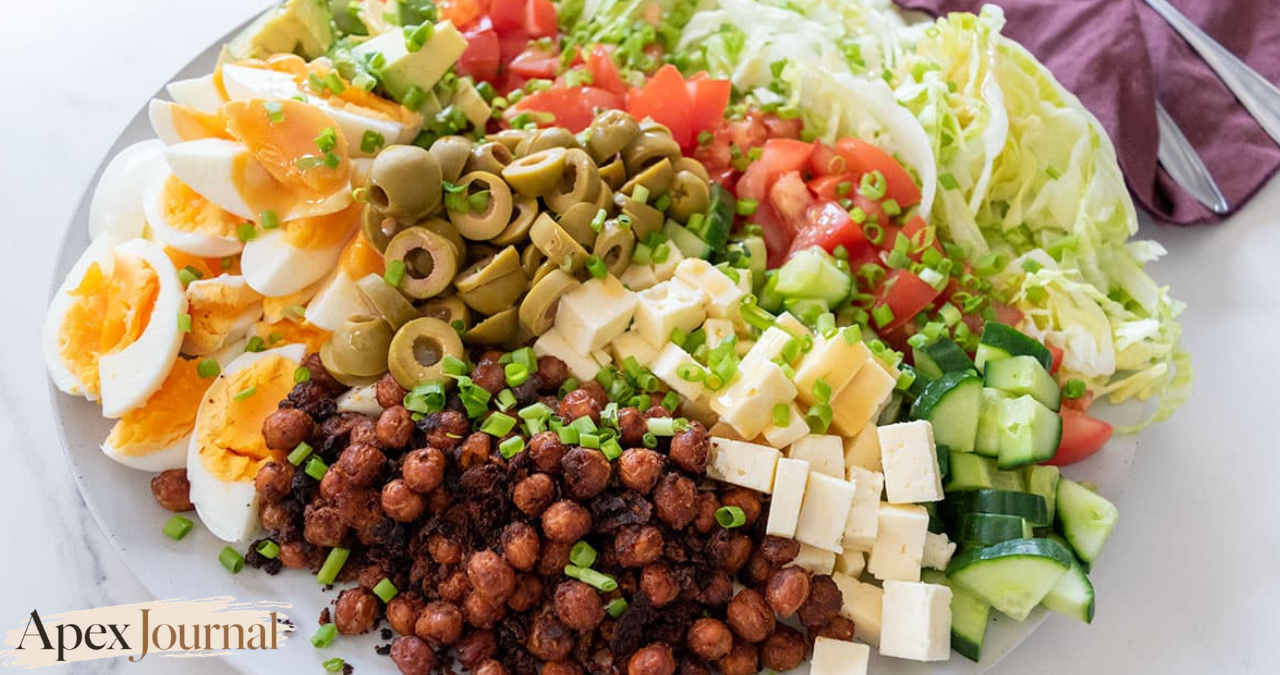
Have you ever looked at a salad and thought, this actually feels like a full meal? Not just a side dish pretending to be healthy, but something satisfying, colorful, and genuinely exciting? That’s exactly the charm of a cob salad.
It’s one of those dishes that quietly does everything right—texture, flavor, balance—without trying too hard. And somehow, even after decades, it still feels fresh. Maybe it’s the combination of ingredients, or maybe it’s the way everything is neatly arranged like a little edible masterpiece. Either way, there’s something undeniably appealing about it.
Let’s take a closer look at what makes this salad so timeless—and why it continues to show up on menus and dinner tables everywhere.
Understanding Cob Salad
At its core, a cob salad is a hearty American salad made with chopped greens topped with rows of neatly arranged ingredients. Typically, you’ll find lettuce, grilled or roasted chicken, crispy bacon, hard-boiled eggs, tomatoes, avocado, and blue cheese—all brought together with a flavorful dressing.
The beauty of this dish lies in its structure. Unlike tossed salads, everything is often lined up in rows before being mixed, giving it that signature look. It’s organized, visually appealing, and honestly… a bit satisfying to look at before you dig in.
The name itself comes from the original creator, Robert H. Cobb, who reportedly threw together leftovers late one night. Funny how some of the best dishes come from those “what do I have in the fridge?” moments.
How It Works / Key Concepts
The Balance of Ingredients
A cob salad isn’t just a random mix—it’s carefully balanced. You’ve got protein from chicken, eggs, and bacon; healthy fats from avocado; crunch and freshness from lettuce and vegetables; and bold flavor from blue cheese.
Each bite ideally gives you a bit of everything. That’s the goal.
The Chopped Style
Everything is usually chopped into bite-sized pieces. This isn’t accidental—it ensures that every forkful is packed with flavor. No awkward bites of just lettuce here.
The Dressing Factor
Traditionally, a red wine vinaigrette is used, though many variations exist. The dressing ties everything together without overpowering the ingredients.
Benefits / Importance / Why It Matters
So why does a cob salad matter in a world full of trendy food bowls and viral recipes?
For one, it’s incredibly balanced nutritionally. You get protein, fiber, healthy fats, and essential nutrients in one plate. That’s not always easy to achieve with a typical meal.
It’s also versatile. You can tweak it based on dietary needs—swap out bacon, change the cheese, or go vegetarian. It adapts without losing its identity.
And then there’s the satisfaction factor. Unlike lighter salads that leave you hungry an hour later, this one actually fills you up. It feels like a proper meal, not an afterthought.
Practical Uses, Examples, or Applications
A Complete Lunch or Dinner
The most obvious use? A full meal. A well-made cob salad can easily replace lunch or dinner without needing anything else.
Meal Prep Favorite
Because ingredients are stored separately, it works surprisingly well for meal prep. You can assemble it fresh each day without it getting soggy.
Party or Gathering Dish
It also shines at gatherings. Lay everything out in rows on a large platter, and suddenly it becomes a centerpiece—not just food.
Custom Diet Adaptations
Low-carb versions skip sugary dressings. Vegetarian versions replace meat with tofu or beans. High-protein versions add extra eggs or lean meat.
It’s flexible enough to suit almost any eating style.
Tips, Strategies, or Best Practices
Making a great cob salad isn’t complicated, but a few small details can make a big difference.
Use Fresh Ingredients
This might sound obvious, but it matters more here than in many dishes. Since everything is simple and visible, freshness really shows.
Don’t Overdress
A common mistake is drowning the salad in dressing. You want just enough to enhance, not overpower.
Keep Textures in Mind
Try to balance creamy (avocado), crunchy (lettuce), and crispy (bacon). That contrast is part of what makes it enjoyable.
Cut Evenly
Uniform pieces make the salad easier to eat and more visually appealing. It’s a small effort that pays off.
:max_bytes(150000):strip_icc()/20250423-SEA-CobbSalad-VictorProtasio-Beauty1-28-f4b76171d94f4ab99cbcd013f07b7c71.jpg)
Common Mistakes or Misconceptions
Even a classic like the cob salad isn’t immune to a few misunderstandings.
“It’s Just Another Salad”
Not really. Treating it like a basic salad often leads to underwhelming results. It’s meant to be hearty and layered.
Overloading Ingredients
More isn’t always better. Too many toppings can make it messy and unbalanced.
Ignoring Presentation
Part of the charm is the neat arrangement. Skipping that step takes away from the experience.
Using Low-Quality Cheese
Blue cheese plays a key role. Using a bland substitute can flatten the entire flavor profile.
Interesting Facts or Insights
- The original cob salad was created at the Brown Derby restaurant in Hollywood.
- It was reportedly made using leftovers from the kitchen—talk about a successful experiment.
- The dish became popular among celebrities in the early days of Hollywood.
- Traditionally, ingredients are arranged in rows before mixing.
- It’s one of the few salads that consistently feels like a main course.
- The name “Cobb” comes from its creator, not the ingredients.
- Despite its age, it continues to appear on modern restaurant menus worldwide.
FAQs
What is a cob salad made of?
A cob salad typically includes lettuce, chicken, bacon, eggs, tomatoes, avocado, blue cheese, and a vinaigrette dressing. Variations are common.
Is cob salad healthy?
Yes, it can be quite healthy. It offers a good mix of protein, healthy fats, and vegetables, though calorie content depends on ingredients and dressing.
Can I make cob salad vegetarian?
Absolutely. You can replace meat with plant-based options like tofu, beans, or grilled vegetables without losing the essence of the dish.
What dressing goes best with cob salad?
A red wine vinaigrette is traditional, but ranch, balsamic, or even lemon-based dressings can work well depending on your preference.
Why is it called a cob salad?
It’s named after Robert Cobb, who is credited with creating the dish in Hollywood.
Conclusion
There’s something quietly impressive about a cob salad. It doesn’t rely on trends or gimmicks—it just works. Every ingredient has a purpose, every bite feels intentional, and somehow it manages to be both simple and satisfying at the same time.
Maybe that’s why it has lasted so long. In a world where food trends come and go, this salad sticks around—not because it’s flashy, but because it delivers.